
Trapping ends the infestation. Sealing the building keeps it ended.
Most rodent work fails for one reason: nobody closed the holes. We treat exclusion as the actual job and trapping as the part that gets you relief while the sealing happens. A house mouse fits through a gap the width of a pencil, and older North Shore homes have a lot of them.
How rodents announce themselves
What homeowners notice first, and what it usually means.
- Droppings along runwaysConcentrated behind appliances, in drawers, along basement sills, and in insulation. Fresh droppings are dark and pliable; old ones are gray and crumble.
- Night noise overheadScratching, scurrying, or gnawing in ceilings and wall voids after dark, usually loudest in the first hours after sunset.
- Gnaw marks and shavingsFresh chewing on wood, wiring, plastic, and stored food packaging. Rodent incisors never stop growing, so gnawing is constant.
- Grease and rub marksDark smudges along baseboards, pipe chases, and beam edges where the same route gets used nightly.
- Nesting materialShredded insulation, paper, and fabric packed into voids, appliance cavities, stored boxes, and vehicle engine bays.
- Pet behaviorDogs and cats fixating on a specific wall, cabinet, or appliance often find the problem before people do.
How we work a rodent job
- Full-perimeter inspectionWe walk the exterior looking for every entry a rodent can use: utility penetrations, dryer and bath vents, gaps under siding, garage door corners, sill plate gaps, roof and soffit junctions.
- Interior activity mappingBasement, crawl space, attic, kitchen, and garage. We identify runways and harborage so devices go where rodents actually travel, not where they're convenient to place.
- ExclusionEntry points sealed with materials rodents can't chew through — copper mesh, hardware cloth, sheet metal, and sealant. This is the part that determines whether the problem returns.
- Trapping and monitoringDevices placed along established runways and checked on a set schedule until activity stops. Where conditions allow, we work without rodenticide.
- Follow-up and sanitation guidanceReturn visits to verify the population is down and the seals are holding, plus specific recommendations on food storage, clutter, and exterior harborage.
Why we lead with exclusion
Bait stations alone create a maintenance contract, not a solution. If the building stays open, new rodents move in from outside as fast as the old ones are removed — and you pay every month for the privilege. Sealing the structure is more work upfront and it's the only thing that actually ends the cycle.
Older homes on the North Shore
Northport, Huntington, Centerport, and Cold Spring Harbor have a lot of housing stock built before modern sealing standards. Fieldstone foundations, balloon framing, and additions joined to original structures all create voids and gaps that give rodents interior highways. These homes are very sealable — they just take a careful eye.
Commercial and food-facility rodent work
We hold NY DEC Category 7F certification for food processing and handling, which is required for pest management in food-service environments. For restaurants and food facilities we document device locations, maintain service logs suitable for health inspection, and can use fluorescent tracking powder to map travel routes in difficult accounts. See commercial pest control.
Where we provide this service
Northport, East Northport, Huntington, Halesite, Centerport, Greenlawn, Cold Spring Harbor, Fort Salonga, and the surrounding North Shore communities. See all service areas.
What this looks like in the field
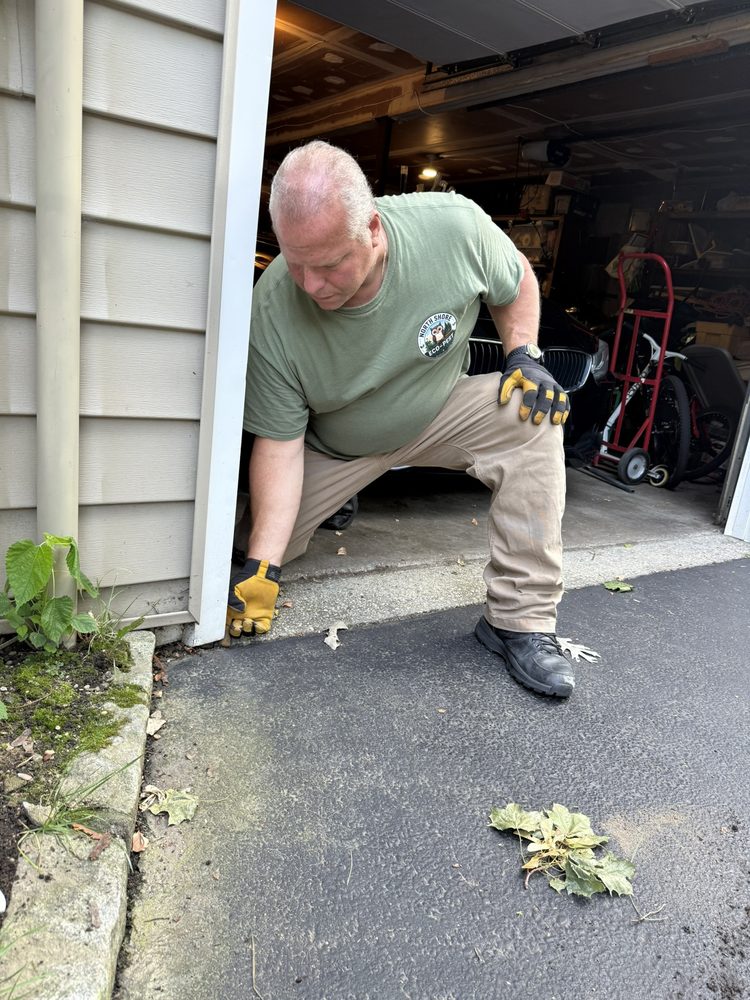
Photos from actual jobs on the North Shore.
Not sure what you're dealing with?
Send a photo by text and we'll tell you what it is. Identification is free, and it's the step that determines everything else.