
Yellowjackets in August are a different animal than yellowjackets in June.
Colonies peak in late summer, and as natural food sources dry up they turn aggressive and start showing up around decks, garbage cans, and outdoor meals. Ground-nesting yellowjackets are the most common sting incident on Long Island properties, usually triggered by a lawnmower. We remove nests directly rather than spraying and hoping.
What you're likely dealing with
Identification changes the removal approach.
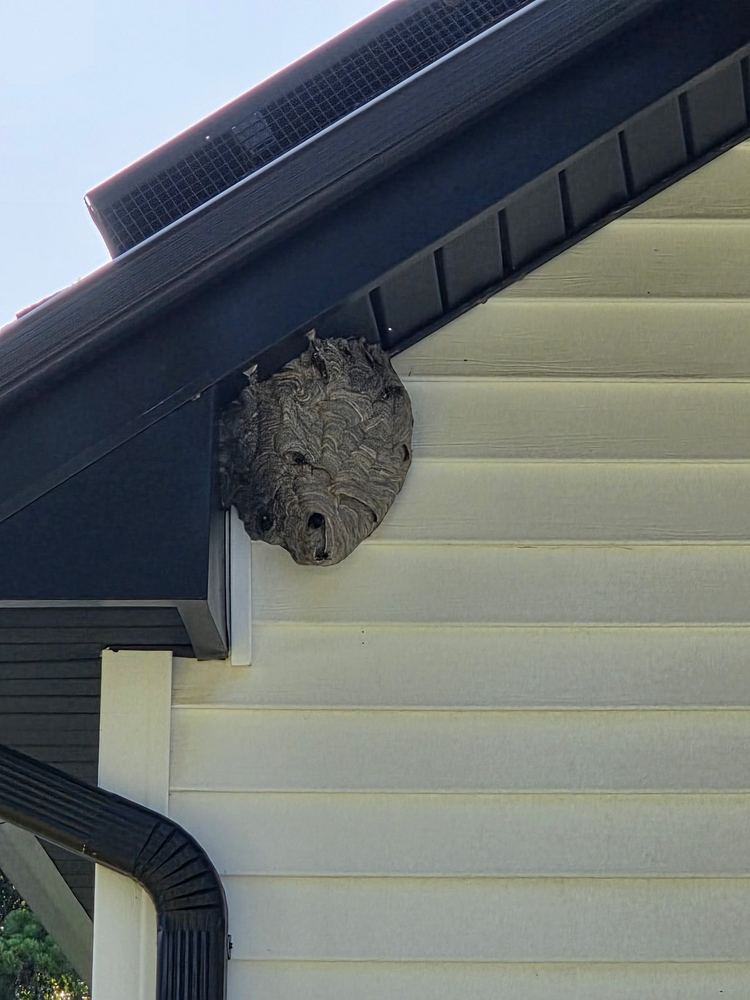
- Bald-faced hornetsLarge gray paper nests hanging from trees, eaves, and shrubs. Highly defensive within several feet of the nest and capable of stinging repeatedly.
- Yellowjackets in the groundTraffic in and out of a hole in the lawn, under a shed, or at a stone wall base. Mowing over an entrance is the classic multi-sting scenario.
- Yellowjackets in wall voidsEntering through a gap in siding, soffit, or utility penetration. These require care — sealing the entry without removal drives them indoors.
- Paper waspsSmall open-comb nests under railings, eaves, grills, and porch furniture. Less aggressive, but placed exactly where hands go.
- Cicada killersLarge solitary wasps excavating in sandy soil and bare lawn. Alarming to watch and essentially harmless to people — often no treatment needed.
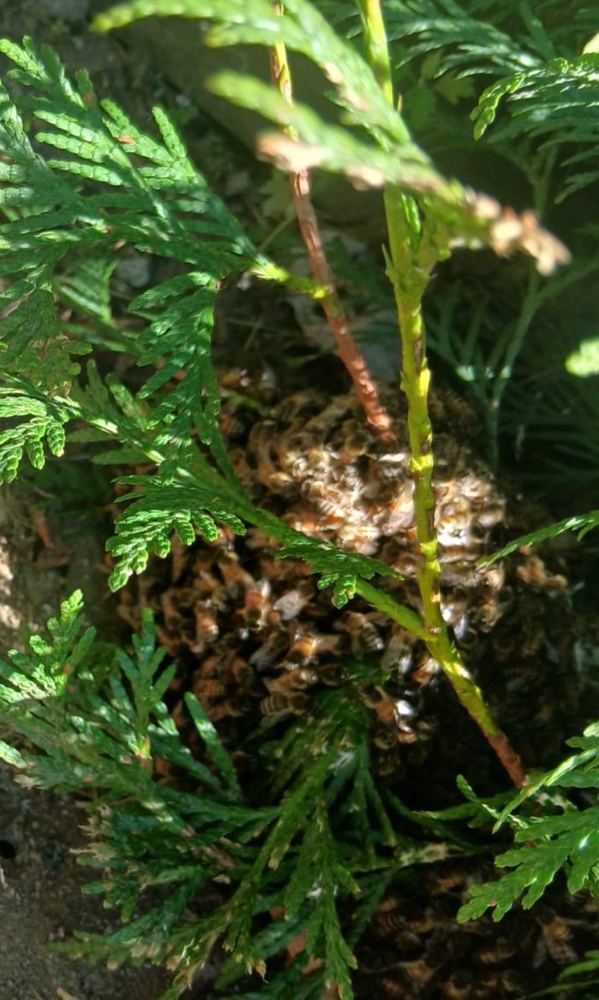
- Honey beesProtected pollinators. We identify them correctly and refer to a beekeeper for removal rather than treating.
How removal works
- Identify the species and locate the nestApproach, timing, and product all depend on what it is and where it's nesting. A void nest and an exposed aerial nest are different jobs.
- Time the treatmentEarly morning or evening, when the colony is at the nest and returning foragers are accounted for. Midday treatment leaves workers in the field.
- Treat the nest directlyProduct is applied at the nest and entry rather than sprayed across the general area, which is what actually ends the colony.
- Remove or seal after activity stopsAerial nests come down once dead. Void entries get sealed only after the colony is confirmed inactive, never before.
- Check for satellite nestsProperties with one nest frequently have others. We check eaves, soffits, sheds, playsets, grills, and ground harborage before leaving.
If someone has been stung
Multiple stings, or any sting in someone with a known allergy, is a medical situation — call 911 or get to an emergency room. Signs of a systemic reaction include hives spreading away from the sting site, swelling of the face or throat, difficulty breathing, and dizziness. Don't wait to see whether it improves.
Why we don't recommend DIY on ground nests
Aerosol cans have a shorter range than the label suggests, ground colonies can number in the thousands by August, and yellowjackets pursue. Nearly every serious stinging incident we're called about started with a homeowner treating at the wrong time of day with the wrong equipment. It's a fast job with the right gear and a bad night without it.
Where we provide this service
Northport, East Northport, Huntington, Halesite, Centerport, Greenlawn, Cold Spring Harbor, Fort Salonga, and the surrounding North Shore communities. See all service areas.
What this looks like in the field
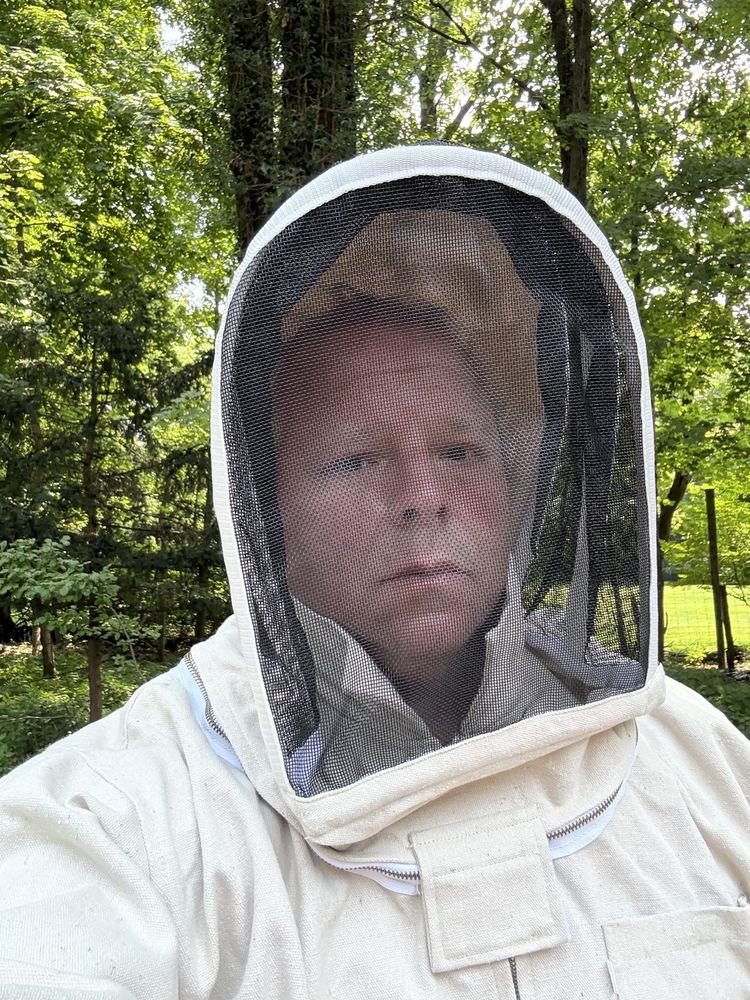
Photos from actual jobs on the North Shore.
Not sure what you're dealing with?
Send a photo by text and we'll tell you what it is. Identification is free, and it's the step that determines everything else.